


Prostatitis is a disease that can suddenly overtake any man.
The urinary tract passes through the prostate gland, which contributes to the manifestation of one of the first signs of the disease - difficulty urinating.
Prostatitis - the beginning
The appearance of the disease is always related to certain circumstances of our life.
There are several types of prostatitis:
- spicy;
- chronic;
- Infectious (bacterial);
- Non-infectious.
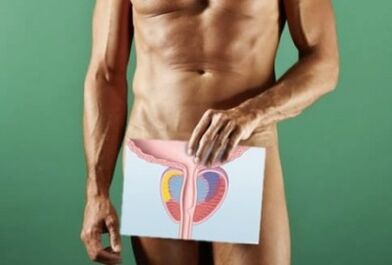
The nomenclature in this case is binary, for example, infectious prostatitis can be chronic and acute.
Each type of prostatitis will start differently and be preceded by its own individual circumstances.Let's take a look at them.
Risk factors, circumstances of occurrence
- STD.When infected by a sexual partner with some sexually transmitted infection, a man has a high chance of developing an acute infectious prostate, which can then turn into a chronic one.Thus, sexually transmitted diseases will be the first factor predisposing to prostatitis.
- Sedentary lifestyle, sedentary work, apathy towards sports and morning exercises, obesity.This is the cause of non-infectious prostatitis, which may worsen or progress with unclear symptoms.
- Hypothermia - in this case, the genitourinary system is subjected to frequent colds, as a result of which the bladder, seminal ducts, prostate gland and testicles can become inflamed.
- Age.When a person turns 40-45, irreversible changes begin in the prostate gland.This is associated with male menopause - a direct consequence of hormonal changes in the body.The prostate grows (hyperplasia), which is accompanied (or may be accompanied) by the whole range of symptoms of prostatitis.
Let's summarize once again - these factors increase tenfold the chances of developing prostatitis.

Next, we will analyze the first signs of different types of prostatitis.
Attention, before engaging in self-diagnosis, when the first signs are detected or in a panic, seek contact with a doctor - pay attention to the above risk factors.Maybe you don't have prostatitis!
Symptoms
Acute process
Let's clarify that the first signs of acute prostatitis in most cases are similar in all patients:
- Pain when urinating, burning afterwards;
- Increase in temperature;
- After heroically emptying the bladder, the patient feels that there is more urine in it;
- Complaints of pain in the groin and perineum.
The pain starts suddenly, there are also problems with the toilet.This is due to the rapid increase in swelling of the inflamed prostate.
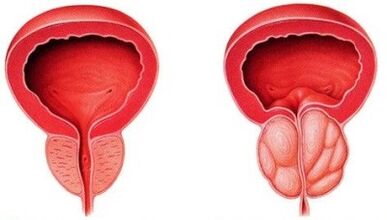
Symptoms may disappear on their own, but do not create illusions: this does not mean that the disease has passed.
Prostatitis becomes chronic.A long time (years) can pass from the first signs of acute prostatitis to the appearance of chronic prostatitis.
Chronic process
Perhaps the patient did not have a pronounced acute period, and the disease, bypassing him, became chronic.
In this case, the symptoms will be as follows:
- Dull pain in the anal region after defecation, radiating to the coccyx;
- Regular or irregular groin pain;
- Going to the toilet does not cause any particular difficulties, but in order to start urinating, you need to strain your stomach a little.The patient does not pay much attention to this;
- Sometimes after urinating, a burning sensation remains in the urethral region.
The first signs of chronic prostatitis may appear after a long period of time.They can disappear, then reappear.
Infectious prostatitis
Often, with infectious prostatitis, the patient is also a carrier of other sexually transmitted diseases.
Among the first signs are:
- Pain in the urethra, blood in the urine;
- Increase in temperature;
- Whitish urine (pus);
- Frequent urge to go to the toilet.
The first signs of bacterial prostatitis are similar to acute prostatitis, since the latter type often appears precisely due to the efforts of an infectious agent.

Non-infectious prostatitis
After 40 years, a man can notice the first signs of non-infectious prostatitis.It's not the bacteria's fault, it's just the weather.
The prostate enlarges, which may manifest itself in some way or may remain unnoticed.
If a person experiences problems, they are reduced to such manifestations as:
- Difficulty urinating;
- Residual urine in the bladder.

If this causes inflammation of the prostate, then pain, burning and possibly fever are added.
Any prostatitis has main (main) manifestations in problems with urination.The pain can be of different localization and intensity, the burning sensation at the end of urination and after it may be absent.
Sexual problems occur in 99 out of 100% of cases, but this is a long process, taking several years or more.
Among the first signs is the weakening of urine pressure.If you have to strain your abdomen to start urinating (even if you're not paying attention), it's time to see a urologist.
This is the first sign of impending prostatitis.
What if you ignore all these symptoms?
Let's say that acute prostatitis goes away on its own (let's imagine that it does).
After a few days of suffering, we can easily go to the toilet again, and the burning sensation and pain have left us.
The euphoria will not last long - chronic inflammation of the prostate begins, so prostatitis will remind of itself.
This is not the worst thing, as you can live with such feelings.What is happening inside the prostate gland is important.
Let's remember what its function is - maintaining the vital activity of the sperm.
Prostatitis inhibits and blocks this function.As a result of advanced prostatitis, a man may lose his ability to fertilize.

Another unpleasant consequence of advanced prostatitis is depression and bad mood.Constant problems with the "toilet" add stress to the man.
Incomplete emptying of the bladder leads to inflammatory processes in it and other parts of the excretory system.
So don't be idle.
How to detect prostatitis?
At the first signs of illness, contact a urologist and tell us about your feelings.
Prostatitis is diagnosed by history, rectal examination of the prostate and TRUS.
Other methods are used as a supplement to determine concomitant diseases or their exclusion.
You can perform diagnostics at home.But prostatitis can be confused with inflammation of the urethra or bladder, so carefully read the diagnosis of prostatitis.
Treatment
Treatment of prostatitis depends on its form.
The main tasks of the doctor are:
- Restoration of a normal ureter.This means reducing swelling, eliminating muscle spasms and stimulating urine production and elimination.
- Fighting an infectious agent or physically removing the cause of prostatitis.
- Relapse prevention (diet, lifestyle and healthy habits).
- Stimulation of the activity of the prostate - rectal massage of the prostate.
The treatment can also be carried out at home, if you have previously agreed on the treatment methods with a urologist.For example, it is useful to apply special microenemas with herbal decoctions.
To speed up recovery, the doctor will prescribe physical therapy.